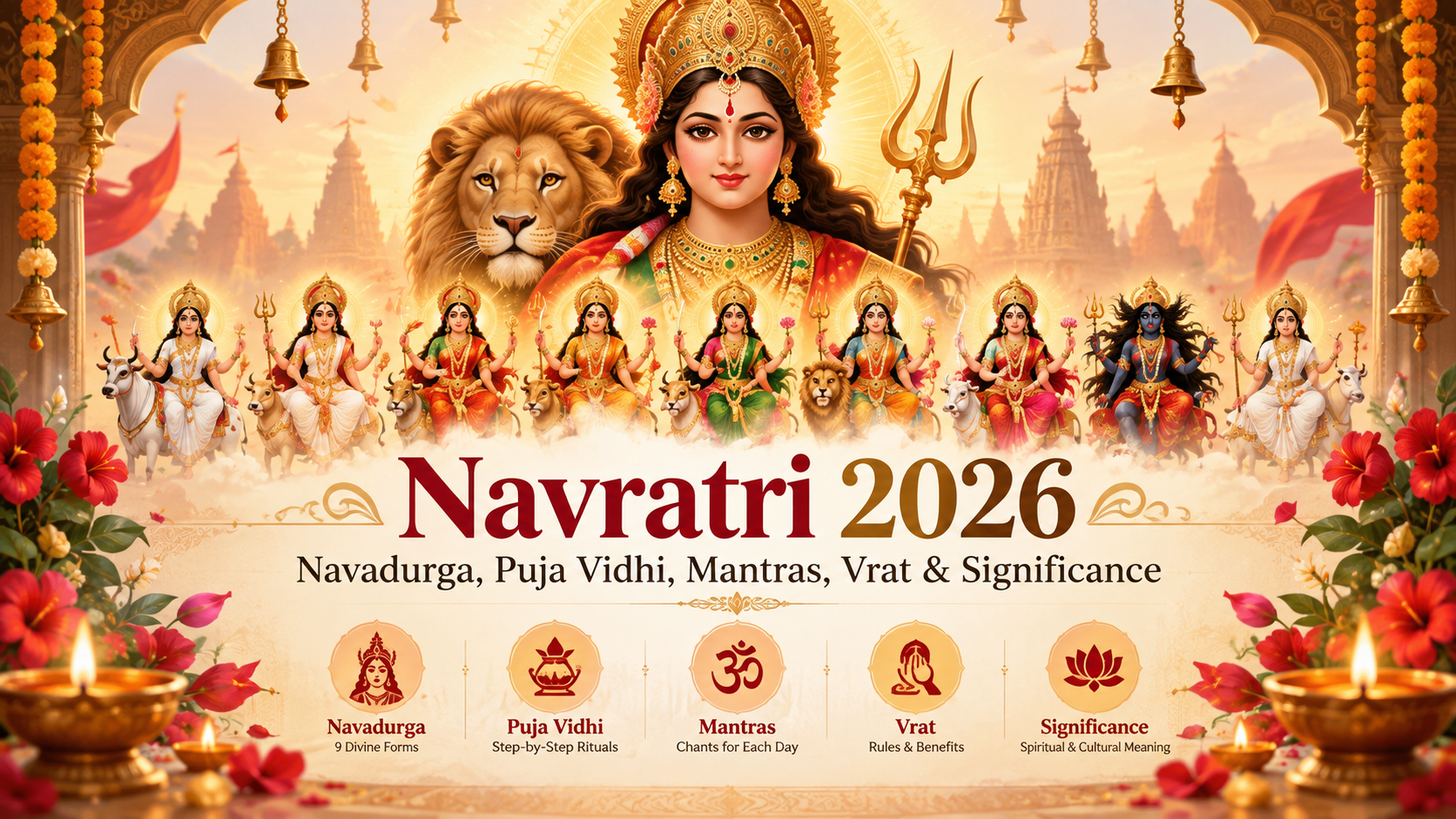
Navratri 2026: Navadurga, Puja Vidhi, Mantras, Vrat & Significance
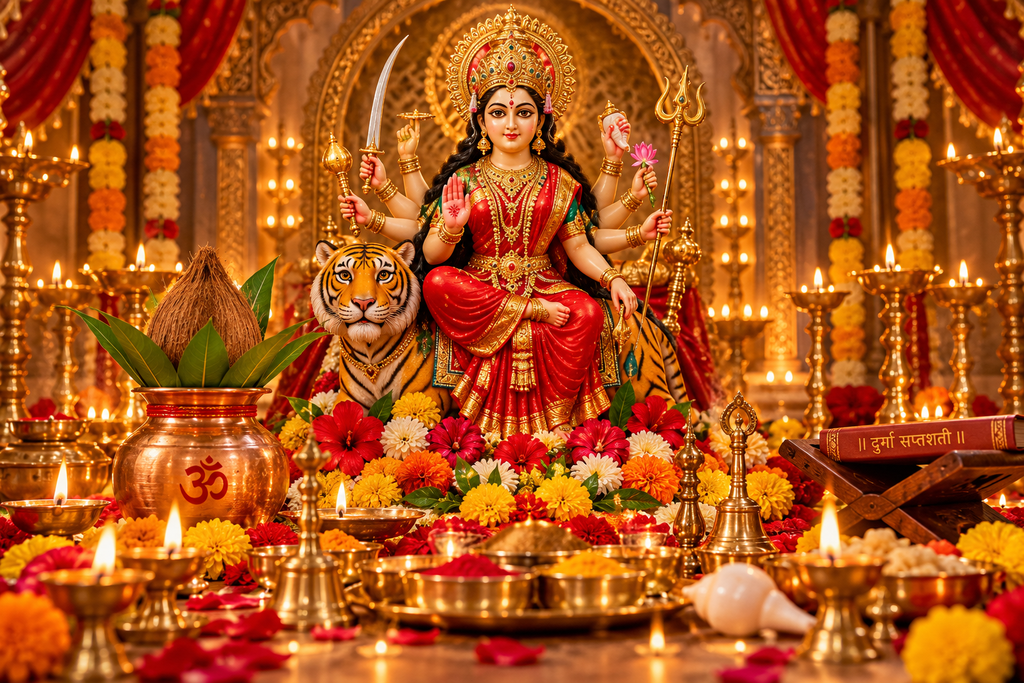
Navratri is a sacred period of devotional observance dedicated to Devi, the Divine Mother, and is associated with worship, prayer, fasting, meditation, and various forms of Shakti upasana. The word Navratri literally refers to “nine nights,” although the exact customs, rituals, stories, foods, prayers, and methods of observance can vary according to region, family tradition, temple, and spiritual lineage.
This complete guide explains the meaning and significance of Navratri, the nine forms of Devi traditionally associated with Sharad Navratri, Navratri Puja, fasting and devotional practices, Devi Deeksha, Yantra worship, Trishakti Yantra, Jagdamba Yantra, and related devotional practices.
Tradition note: Navratri practices are not identical everywhere. Specific Puja procedures, mantras, fasting rules, Deeksha practices, and Yantra rituals may differ according to sampradaya, region, temple, guru, family tradition, and scriptural practice. Follow the instructions of your qualified spiritual teacher or the tradition you follow where applicable.
What Is Navratri?
Navratri is a period of devotional worship associated with Devi or Shakti. The most widely observed Navratri in many parts of India is Sharad Navratri, traditionally observed over nine nights and ten days.
Devotees may observe Navratri through:
- Devi Puja
- Mantra and Stotra recitation
- Meditation and prayer
- Fasting or dietary observances
- Visiting temples
- Reading or listening to sacred texts
- Participating in community celebrations
- Deeksha or other forms of disciplined devotional practice
The form of observance varies considerably across India and among different Hindu traditions.
Why Is Navratri Celebrated?
Navratri is traditionally associated with the worship of Devi and the Divine Feminine. Different traditions connect the festival with different forms, stories, and manifestations of Shakti.
One well-known narrative tradition associates the festival with the victory of Devi Durga over Mahishasura. Other traditions emphasize different forms of Devi, regional stories, or particular methods of Shakti worship.
Therefore, Navratri is not simply a single ritual. It is a broad devotional tradition with multiple regional and spiritual expressions.
What Are the Nine Forms of Maa Durga?
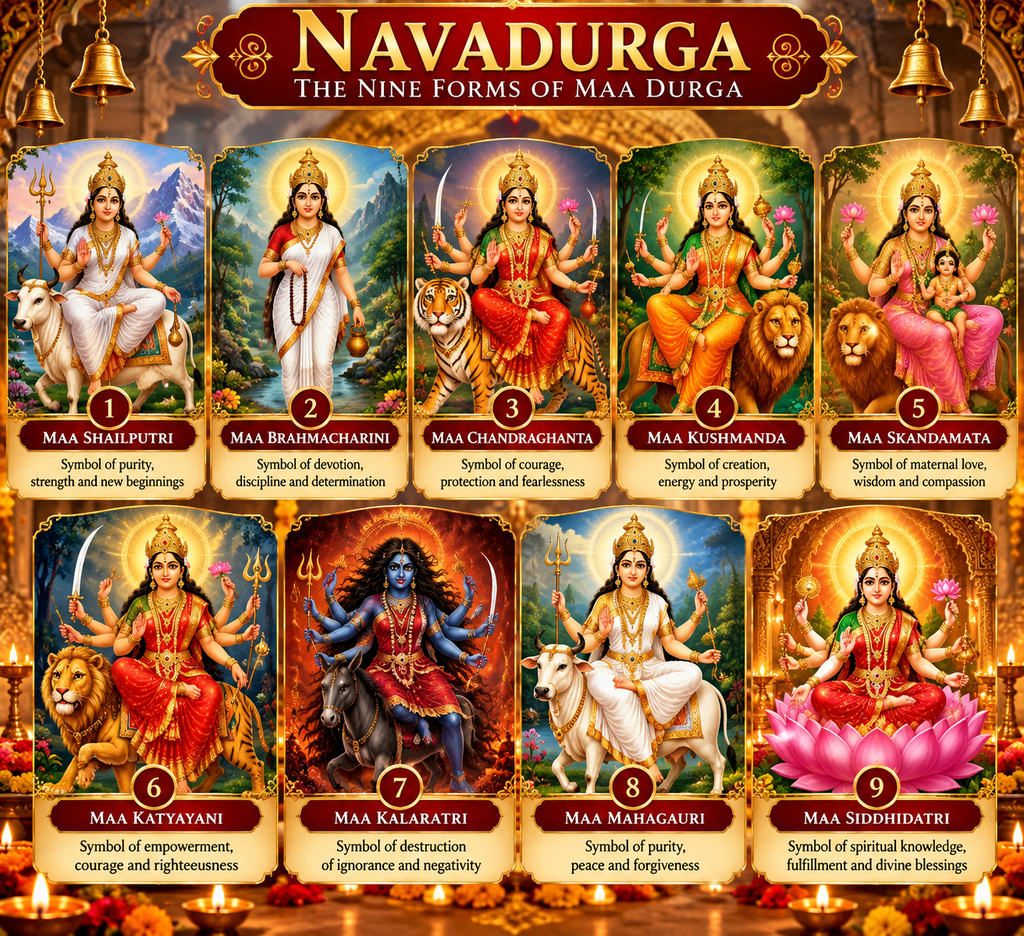
During Sharad Navratri, many devotees worship the Navadurga, the nine traditionally recognized forms of Durga.
| Navratri Day | Form of Devi |
|---|---|
| Day 1 | Maa Shailputri |
| Day 2 | Maa Brahmacharini |
| Day 3 | Maa Chandraghanta |
| Day 4 | Maa Kushmanda |
| Day 5 | Maa Skandamata |
| Day 6 | Maa Katyayani |
| Day 7 | Maa Kalaratri |
| Day 8 | Maa Mahagauri |
| Day 9 | Maa Siddhidatri |
The specific worship procedure, associated mantras, offerings, and interpretations can vary according to tradition.
Navratri Puja
Navratri Puja is a form of devotional worship offered to Devi. A Puja may include preparation of a sacred space, invocation, offerings, prayers, mantra or Stotra recitation, Aarti, and Prasad.
The exact procedure should be followed according to the tradition or method being practiced.
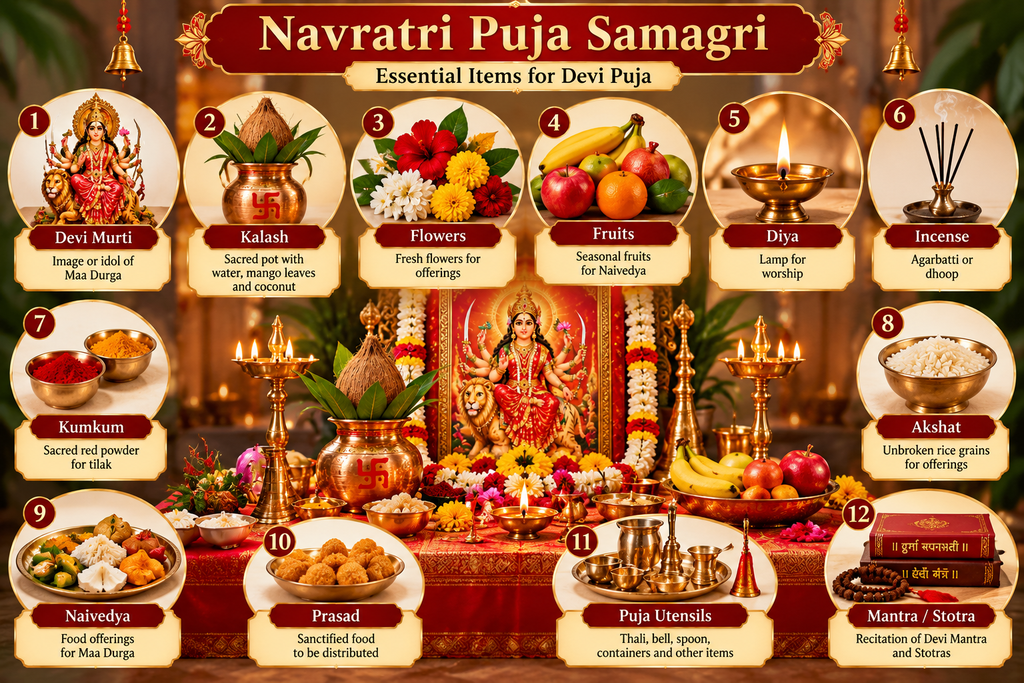
Common Elements of Navratri Puja
Depending on the tradition, devotees may prepare:
- A clean Puja space
- Devi image or Murti
- Kalash
- Flowers
- Fruits
- Naivedya
- Incense
- Diya
- Kumkum
- Akshat
- Traditional Puja materials
- Relevant scriptures, Mantras or Stotras
Not every tradition requires the same materials, so a specific Puja list should be based on the procedure being followed.
How to Perform Navratri Puja at Home
For a simple devotional observance, devotees may follow a sequence such as:
- Clean and prepare the worship area.
- Place the image or representation of Devi according to your tradition.
- Prepare the required Puja materials.
- Perform Sankalp if prescribed by your tradition.
- Begin the Devi worship according to the chosen Puja procedure.
- Offer flowers, Naivedya and other prescribed offerings.
- Recite the relevant Mantra, Stotra or prayer.
- Perform Aarti where customary.
- Offer and distribute Prasad according to the tradition.
For formal or specialized rituals, follow the procedure taught by a qualified priest, Acharya, Guru, temple, or established tradition.
What Is Navratri Vrat?
Navratri Vrat refers to devotional fasting or dietary observance during Navratri.
Fasting practices vary significantly. Some devotees observe complete or partial fasting, while others follow specific dietary restrictions. Commonly observed foods may include certain fruits, roots, milk products, or specially prepared fasting foods, depending on regional and family traditions.
There is no single dietary rule that applies to every devotee.
People with medical conditions, dietary restrictions, pregnancy, or other health considerations should seek appropriate professional advice before undertaking restrictive fasting.
What Is Navratri Deeksha?
Deeksha is a term used in various Indian spiritual traditions for a formal spiritual commitment, initiation, or disciplined period of devotional practice. Its meaning and procedure can vary substantially according to lineage and tradition.
A Navratri Deeksha may involve a prescribed period of:
- Prayer
- Mantra practice
- Devi worship
- Dietary discipline
- Personal discipline
- Meditation
- Spiritual study
- Specific ritual observances
The exact requirements should always be explained by the tradition, Guru, Acharya, or organization offering the Deeksha.
Navratri Vrat vs Deeksha
These terms should not automatically be treated as interchangeable.
Vrat generally refers to a religious vow or observance and may involve fasting or specific restrictions.
Deeksha can refer to a more formal spiritual commitment or initiation and may include prescribed practices beyond fasting.
The precise meaning depends on the spiritual tradition.
What Is Devi Upasana?
Upasana broadly refers to devotional or spiritual practice directed toward a chosen form or manifestation of the Divine.
Devi Upasana may involve:
- Puja
- Mantra Japa
- Stotra recitation
- Meditation
- Dhyana
- Offerings
- Study of sacred texts
- Temple worship
- Deeksha, where prescribed
The methods and objectives of Upasana differ between traditions.
What Is a Yantra?
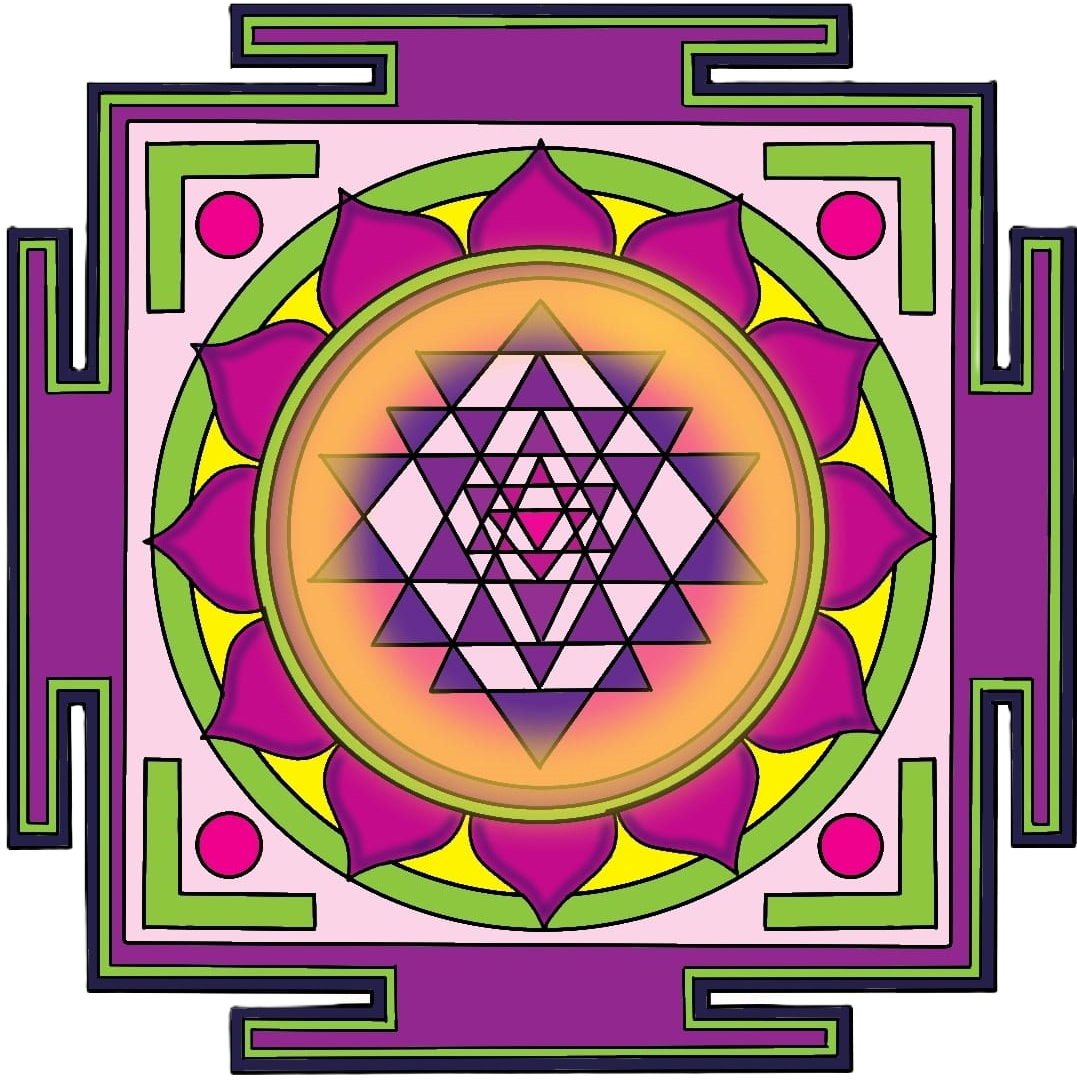
A Yantra is a sacred geometric diagram used in various Hindu and Tantric traditions as part of spiritual and ritual practice.
Different Yantras are associated with different deities, traditions, and forms of worship.
Yantra worship may involve:
- Installation or placement according to tradition
- Mantra
- Puja
- Meditation
- Offerings
- Consecration or Prana Pratishtha where prescribed
The meaning and ritual procedure of a Yantra should be explained according to its particular tradition rather than assuming that every Yantra is used in the same way.
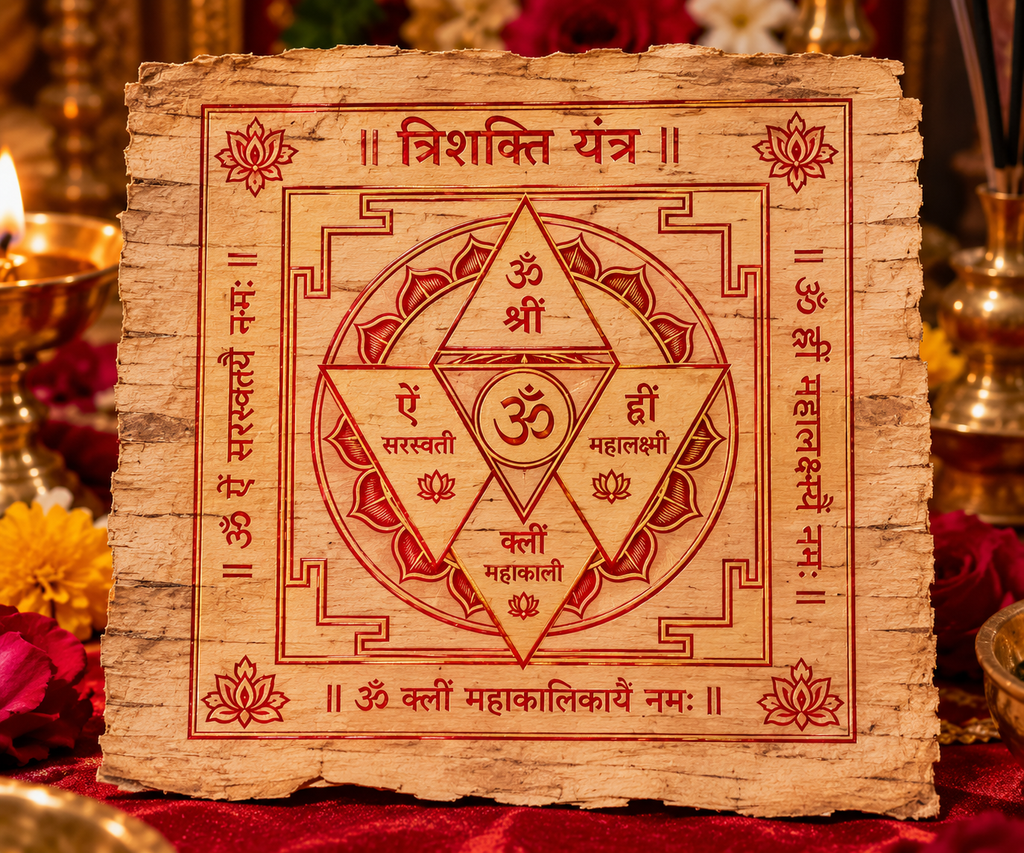
Trishakti Yantra
What Is Trishakti Yantra?
Trishakti Yantra is a term used for a Yantra associated with Shakti worship. The exact design, symbolism, Mantra, method of consecration, and ritual application can vary according to the specific tradition in which it is used.
If you are considering a Trishakti Yantra, it is useful to understand:
- Which tradition it belongs to
- Which form of Devi it represents
- How it is prepared
- Whether it is consecrated
- Which Mantra is traditionally associated with it
- How it should be worshipped
- Who performs or teaches the associated ritual
Trishakti Yantra During Navratri
Navratri is an important period for Devi worship, and some traditions may incorporate specific Yantras into their devotional practices.
However, the use of a particular Yantra should follow the instructions of the relevant spiritual tradition rather than being presented as a universal Navratri requirement.
How to Choose a Trishakti Yantra
Before purchasing a Yantra, consider:
- Its source and tradition
- Who prepared it
- Whether it has been consecrated
- What material it is made from
- Its size and specifications
- Whether instructions are provided
- Who can explain its traditional method of worship
A transparent seller or organization should clearly explain these details instead of making unverifiable promises about guaranteed results.
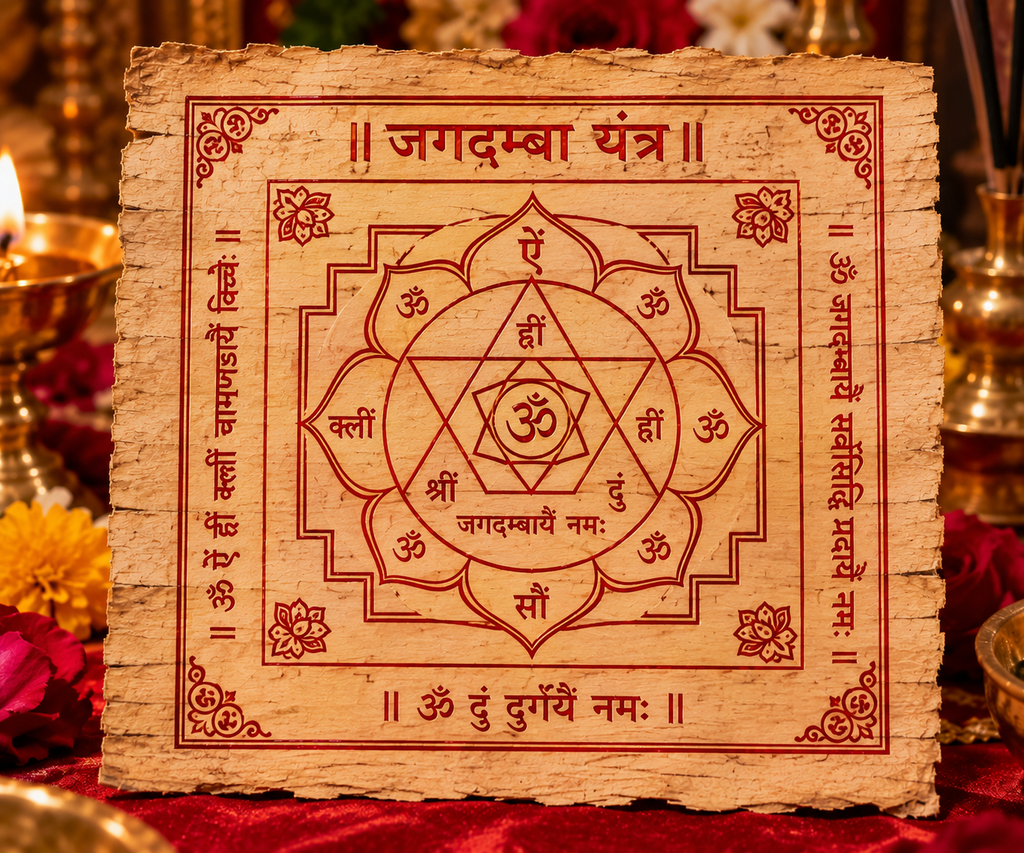
Jagdamba Yantra
What Is Jagdamba Yantra?
Jagdamba Yantra is a term used for a sacred Yantra associated with Jagdamba or Devi worship in particular spiritual traditions.
The exact symbolism and worship procedure should be understood from the tradition in which the Yantra is being offered.
Depending on the lineage, devotees may use a Yantra as part of:
- Devi Puja
- Mantra practice
- Meditation
- Navratri observance
- Other forms of Shakti Upasana
Jagdamba Yantra During Navratri
Devotees who traditionally use Jagdamba Yantra may incorporate it into Navratri worship according to their prescribed method.
The appropriate procedure may include specific Mantras, offerings, placement, or consecration practices. These should be explained by the relevant tradition.
Trishakti Yantra vs Jagdamba Yantra
Trishakti Yantra and Jagdamba Yantra should not be treated as identical simply because both are associated with Devi or Shakti worship.
Their:
- Symbolism
- Geometry
- Associated deity
- Mantra
- Consecration procedure
- Worship method
- Traditional purpose
may differ depending on the lineage or system in which they are used.
If you offer both Yantras, clearly explain the traditional distinction on each product page.
Jagdamba Deeksha / Gagdamba Deeksha
If your organization offers a specific form of Jagdamba Deeksha or Gagdamba Deeksha, create a dedicated explanation of the tradition and procedure.
What Is Jagdamba Deeksha?
Jagdamba Deeksha may refer to a particular devotional or spiritual observance dedicated to Jagdamba. Because the meaning of Deeksha varies among traditions, the exact process should be documented according to the specific lineage or organization conducting it.
A dedicated Deeksha program may include:
- Sankalp
- Devi worship
- Mantra practice
- Daily devotional discipline
- Dietary observances
- Specific Puja
- Guidance from a teacher or Acharya
- Completion rituals
The actual requirements should be clearly provided to participants before registration.
Who Can Participate in Deeksha?
Eligibility depends on the particular Deeksha tradition.
A responsible Deeksha program should clearly explain:
- Eligibility
- Duration
- Required practices
- Daily schedule
- Dietary requirements
- Required materials
- Guidance/support available
- Completion procedure
- Any restrictions or commitments
What Should You Know Before Taking Deeksha?
Before participating, understand exactly what is expected.
Ask:
- Who is conducting the Deeksha?
- Which tradition or lineage is being followed?
- What is the duration?
- What daily practices are required?
- Are there dietary requirements?
- What Mantra or Puja is involved?
- Is initiation required?
- What happens at completion?
- What support is available during the Deeksha?
This helps devotees make an informed decision and follow the practice correctly.
Navratri, Pooja, Yantra and Deeksha: How They Relate
These concepts are related but are not interchangeable.
Navratri is a period of devotional observance.
Puja is a form of ritual worship.
Upasana refers broadly to devotional/spiritual practice.
Yantra is a sacred geometric diagram used in particular ritual and contemplative traditions.
Mantra is a sacred verbal formula used in spiritual practice.
Deeksha can refer to initiation or a formal spiritual commitment, depending on the tradition.
A devotee may encounter several of these practices together, but their specific relationship depends on the tradition being followed.
Navratri Puja Samagri
The required Samagri varies according to the Puja procedure.
A general devotional preparation may include:
- Devi image or Murti
- Kalash
- Flowers
- Fruits
- Diya
- Incense
- Kumkum
- Akshat
- Naivedya
- Prasad
- Traditional Puja utensils
- Relevant Mantra or Stotra texts
For a formal Puja, use the exact Samagri list supplied by your priest, temple, Guru, or tradition.
How to Prepare for Navratri
A simple preparation checklist:
1. Decide Your Observance
Determine whether you will observe Navratri through:
- Daily Puja
- Temple visits
- Vrat
- Mantra Japa
- Scripture reading
- Deeksha
- Other traditional practices
2. Prepare the Worship Space
Clean and organize the place where you will perform your daily worship.
3. Arrange Required Materials
Prepare the Samagri according to your specific Puja procedure.
4. Learn the Procedure
If you are following a specialized ritual, learn it beforehand from the relevant tradition or qualified practitioner.
5. Plan Your Daily Routine
Set aside a consistent time for prayer, Puja, Japa, meditation, or other observances.
6. Follow Your Tradition
Do not combine unrelated ritual procedures simply because they appear together online. Follow a coherent practice from a reliable traditional source.
Frequently Asked Questions About Navratri
What is Navratri?
Navratri is a period of devotional observance associated with Devi or Shakti worship. Sharad Navratri is traditionally observed over nine nights and ten days, with practices varying across regions and traditions.
Why is Navratri celebrated?
Navratri is associated with the worship of Devi and Shakti. Different traditions connect the festival with different forms, stories, and spiritual practices.
What are the nine forms of Devi worshipped during Navratri?
The Navadurga traditionally associated with Sharad Navratri are Shailputri, Brahmacharini, Chandraghanta, Kushmanda, Skandamata, Katyayani, Kalaratri, Mahagauri, and Siddhidatri.
What is Navratri Deeksha?
Navratri Deeksha refers to a period or form of disciplined devotional practice associated with Navratri. Its exact meaning and requirements vary by spiritual tradition.
What is a Yantra?
A Yantra is a sacred geometric diagram used in various Hindu spiritual and ritual traditions. Different Yantras have different associations and methods of worship.
What is Trishakti Yantra?
Trishakti Yantra is a term used for a Yantra associated with Shakti worship. Its exact symbolism and ritual use depend on the tradition in which it is practiced.
What is Jagdamba Yantra?
Jagdamba Yantra refers to a Yantra associated with Jagdamba or Devi worship in particular traditions. Its design and worship procedure should be understood according to the relevant lineage.
What is the difference between Vrat and Deeksha?
Vrat generally refers to a religious vow or observance, often involving specific restrictions. Deeksha can refer to initiation or a formal spiritual commitment. Their precise meanings depend on the tradition.
Can Navratri Puja be performed at home?
Many forms of devotional Navratri worship can be performed at home, but specific rituals may require instruction from a qualified priest, Guru, Acharya, or established tradition.
Can a Yantra be worshipped at home?
Some Yantras may be traditionally worshipped at home, while specific Yantras may have particular installation or consecration requirements. Follow the instructions of the relevant tradition.
Is every Navratri practice the same across India?
No. Navratri practices vary by region, community, temple, family tradition, and spiritual lineage.
Choosing Authentic Spiritual Products
If you are purchasing a Yantra or related devotional item, look for transparency rather than unsupported promises.
A trustworthy product description should explain:
- Product identity
- Traditional association
- Material
- Size
- Preparation process
- Consecration details, if applicable
- Source/tradition
- Worship instructions
- Shipping information
- Return/refund policy
- Seller or organization information
Avoid relying solely on claims of guaranteed material, financial, health, or personal outcomes.
About Our Navratri Practices
[ADD YOUR ORGANIZATION’S VERIFIED INFORMATION HERE]
Include:
- Organization/Temple/Ashram name
- Founder/Acharya/Priest name
- Tradition or lineage
- Years of experience
- Location
- Navratri activities
- Pooja methodology
- Yantra preparation methodology
- Deeksha process
- Contact information
Where possible, document your actual practices with authentic photographs, videos, practitioner information, and references.
Explore Our Navratri Resources
Navratri Guides
- Navratri Puja Vidhi
- Navratri Puja Samagri
- Navratri Vrat Guide
- Navratri Deeksha Guide
- Nine Forms of Maa Durga
Yantra Guides
- Trishakti Yantra
- Jagdamba Yantra
- Trishakti Yantra vs Jagdamba Yantra
- Yantra Worship Guide
Deeksha Guides
- What Is Devi Deeksha?
- Jagdamba Deeksha
- Gagdamba Deeksha
- Navratri Deeksha FAQ
Explore Our Products & Services
Final Thoughts
Navratri is a rich devotional tradition centered on Devi and Shakti worship. For devotees, the period can include Puja, prayer, fasting, Mantra, Stotra, meditation, temple worship, Yantra practices, and Deeksha depending on the tradition being followed.
Whether you are learning about Navratri for the first time, preparing for Puja, exploring Devi Upasana, or looking into a traditional Yantra or Deeksha, the most important step is to understand the practice in its proper traditional context.
Choose authentic sources, understand the procedure before beginning, and follow the guidance of your established spiritual tradition, qualified priest, Guru, or Acharya.
May the devotion, discipline, and spiritual practices of Navratri bring peace, clarity, and deeper connection with the Divine Mother.